Which Chevrolet Express Van Configuration Fits the Work Your Crew Does

The Chevrolet Express and the GMC Savana ride on the same platform, share every mechanical component, and roll off the same assembly line. For a trade buyer comparing the two nameplates, the configuration decisions are identical: wheelbase length, body style, series rating, and powertrain. Your choice comes down to which combination of those four variables matches the loads you carry, the routes you run, and the upfit work you need done before the van earns its first dollar.
Because the Express has been in production since 1996 with only one substantial facelift in its run, the platform is familiar to technicians and well-stocked across the parts supply chain. GM has sold over 3 million combined Express and Savana units, according to figures cited on the model's production history; that volume means you're buying into an ecosystem, not just a vehicle. Spec the wrong van for the job, though, and none of those ecosystem advantages help you.
Wheelbase and What It Actually Costs You on the Job
The Express comes in two wheelbases: a regular length at roughly 133 inches and an extended version at roughly 155 inches. The extra 22 inches translate directly into usable cargo floor behind the bulkhead, so for contractors loading pipe, conduit, ladders, or sheet goods, that floor space is the reason to choose the longer van. But the added length costs you turning radius and overall bumper-to-bumper dimension in ways you'll feel every day if your routes include tight loading docks, narrow alleys, or dense commercial corridors.
If your crew works suburban job sites with open parking lots and straight-shot highway routes, the extended wheelbase is almost always the better call because you get the floor length without suffering the maneuverability penalty. In an urban environment, the regular wheelbase fits standard parking structures and negotiates city blocks without the constant three-point turns that wear out drivers and eat time. Neither wheelbase changes the powertrain options available to you, so the choice is purely about dimension and where you operate. Don't overthink it: match the wheelbase to the tightest space you regularly work in.
Cargo Van Versus Cutaway Chassis for Upfit Work
The cargo van arrives with a completed body, roof, side doors, and rear doors. You can add shelving, partition walls, roof racks, and interior storage systems, but you're working inside a fixed envelope. The roof height, body width, and door openings are set at the factory, and a fabricator can only do so much within those constraints.
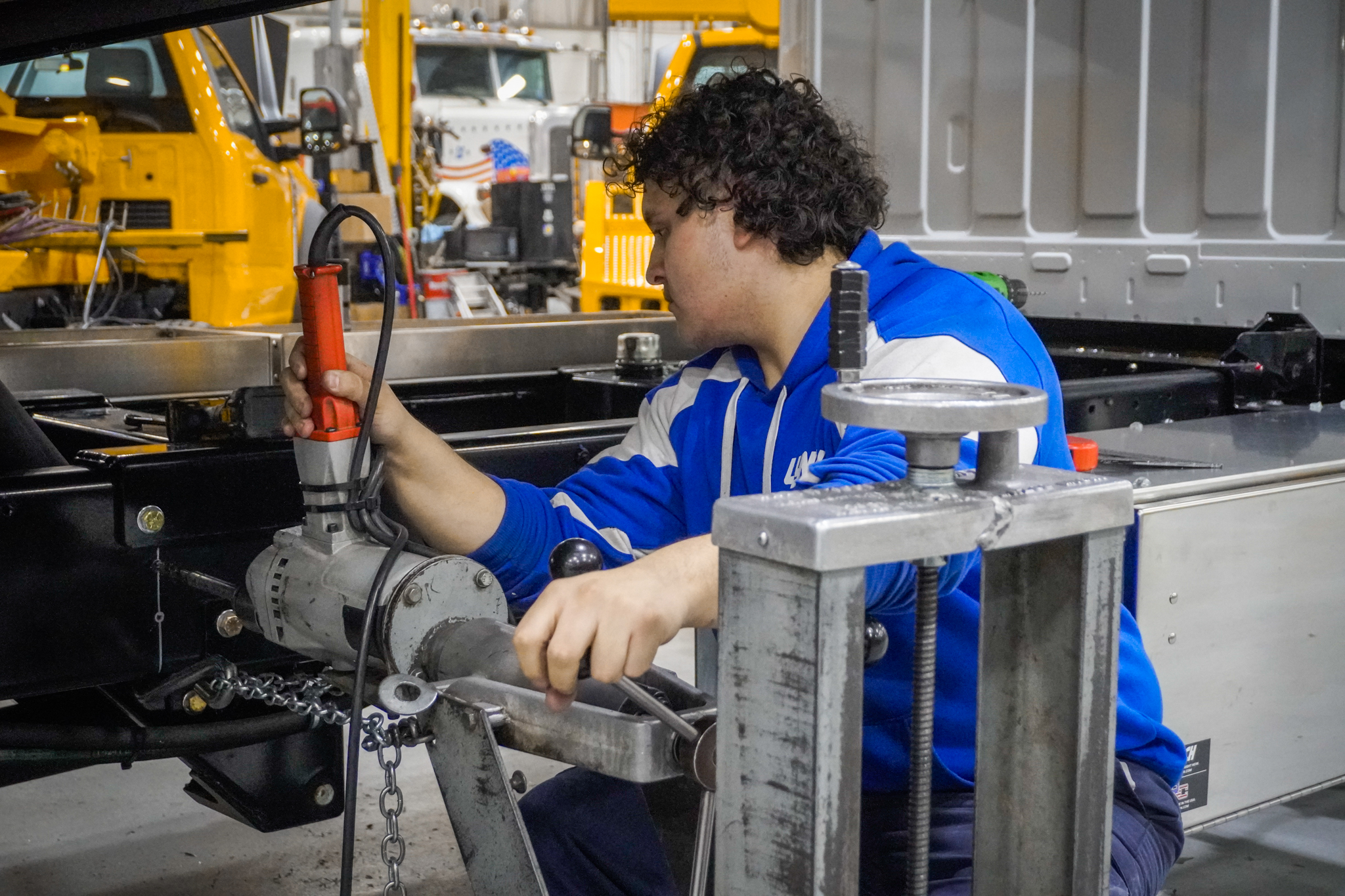
On the cutaway chassis, GM removes the rear body and delivers a bare frame behind the cab, so your upfitter can build ambulance boxes, shuttle bus bodies, service bodies, or specialty cargo configurations that a standard cargo body can't accommodate. Buyers choosing a cutaway accept a longer lead time because the finished vehicle requires a separate body installation, and that work needs to be coordinated between the chassis order and the body builder's production schedule. The payoff is full control over interior dimensions, load ratings, and access points. If your operation needs commercial truck upfitting and custom fabrication, the cutaway is the starting point. A van that just needs shelves, a partition, and maybe a ladder rack gets you working sooner and at lower total cost with the cargo body.
Payload Ratings Across the 2500 and 3500 Series
The 2500 and 3500 series carry different gross vehicle weight rating ceilings, and that ceiling directly sets the legal payload limit you can load before exceeding the rating. A 3500 is the higher-rated series and suits crews carrying heavy tools, compressors, welders, or dense materials on a daily basis, while the 2500 covers lighter commercial use where the payload ceiling is rarely approached, such as delivery routes with bulky but lightweight packages.
Undersizing risks overloading, which brings DOT exposure and accelerated wear on brakes, suspension, and drivetrain components. Oversizing adds acquisition cost and fuel consumption without any operational benefit. A 1500 series exists, but its lower GVWR makes it impractical for most trade work. Exact payload figures vary by configuration and model year, so confirm the numbers against the window sticker or GM spec sheet for the specific unit you're evaluating. Don't rely on generalized figures from a brochure when the actual number is printed on the door jamb.
Passenger Van Configuration for Crew Transport
The passenger van variant seats up to 15 and is commonly used by contractors, municipalities, and service businesses moving crews between job sites; it trades cargo floor space for seating rows and is not easily converted back to a cargo layout without removing seats and addressing the floor track systems that anchor them.
Buyers who split their use between crew transport and tool hauling typically find that neither the passenger nor the cargo configuration fully satisfies both needs. Some operators compromise by ordering a cargo van with a partition and minimal seating rather than committing to the full passenger layout. Keep in mind that the passenger van's higher seating count can affect your insurance classification, and in some jurisdictions, a 15-passenger configuration triggers different driver licensing requirements. Confirm the regulatory requirements for your state and your crew size before you spec a 12- or 15-passenger van, because unwinding that decision after purchase is expensive.
Parts Availability and Long-Term Ownership on an Unchanged Platform
Platform stability is one of the Express's strongest practical advantages. GM introduced the current architecture in 1996 and has kept it in production with only one major facelift in roughly 25 years; that kind of continuity creates a dense parts ecosystem: OEM warehouses, independent suppliers, and salvage yards all carry Express components at scale. For a buyer making a multi-year procurement decision, a platform with decades of consistent production means shorter parts lead times and higher technician familiarity than you'll find with newer or lower-volume competitors.
The platform's age works against you in specific ways, though. The Express does not carry the latest driver-assistance technology or fuel-efficiency features found in newer full-size vans from competing manufacturers. If your priority is repairability, low parts cost, and technician familiarity, the Express rewards that focus. Buyers who need modern safety systems, advanced telematics integration, or best-in-class fuel economy will find the platform's age is a genuine liability. When you do need OEM or all-makes commercial truck parts, a dedicated parts center with Express-compatible inventory reduces downtime compared to ordering through a general auto parts chain. Keeping a commercial truck service center familiar with the platform in your rotation for preventative maintenance and diagnostics helps catch issues before they become roadside failures.
What to Inspect on a Used Express Before Buying
High-mileage Express vans concentrate wear in predictable areas. Transmission behavior under load is the first thing to evaluate, especially on units that spent their working life hauling heavy cargo or towing. Suspension components deserve close attention on extended-wheelbase units that carried heavy loads regularly, because the added floor length puts more stress on rear leaf springs and shocks. In northern markets, rust on the frame rails and body seams is common and can compromise structural integrity if it's gone unchecked.
Diesel units require additional inspection of the emissions system and injectors, both of which carry higher replacement costs than their gasoline equivalents. Pull the VIN history and confirm whether the unit was fleet-maintained or owner-operated. Fleet units often have documented service records that reduce your inspection uncertainty considerably. One important note: the GMC Savana shares all mechanical components with the Express, so a used Savana represents equivalent inventory and should not be excluded from your search based on nameplate alone. A pre-purchase inspection by a commercial truck technician familiar with the platform catches issues a general inspection may miss, so schedule a truck service appointment with a shop that knows these vans before you sign.
Configuration Verdicts by Work Type
Contractors hauling tools and materials daily on suburban routes should favor the extended-wheelbase 3500 cargo van with the gasoline V8. You get the payload capacity and the cargo floor length without paying the diesel premium or dealing with diesel-specific service requirements.
Delivery operations running high annual highway mileage should look at the extended-wheelbase 2500 or 3500 with the Duramax diesel, but only when the mileage threshold genuinely justifies the fuel savings. Run the numbers with your actual route data before committing.
Crew transport operations favor the regular-wheelbase passenger van for urban maneuverability, so confirm the regulatory requirements on seating count before you order.
Specialty operations requiring a custom body, whether that's a service truck, shuttle conversion, or something else entirely, should start with the cutaway chassis paired with a qualified upfitter who can build exactly what the job demands. Buyers considering custom body work can explore in-house upfitting and fabrication services to understand the scope of what's possible on the Express cutaway platform.
If your use case crosses two of these categories and you can only buy one van, the extended-wheelbase 3500 cargo van is the most flexible single Chevrolet Express van choice; it accommodates both payload and basic upfit work without committing you to a cutaway, and it keeps the gasoline V8's simpler service profile. When you're ready to move forward, commercial truck financing and leasing support can help structure the acquisition so the monthly cost fits your operation's cash flow.