Solving Long Upfit Lead Times by Buying a GMC Cutaway Van From Dealer Stock

A GMC Savana Cutaway leaves the factory as an incomplete vehicle. The chassis rolls off the line without a rear body, which means the buyer still needs an upfitter to build and install the working configuration before the truck can do anything useful. That two-stage procurement process is where timelines stretch far beyond what most buyers expect, especially those accustomed to ordering a finished vehicle and waiting for delivery. Knowing how those stages stack, and where dealer stock can compress or eliminate one of them, is the difference between deploying a unit in weeks and waiting months.
Why the GMC Cutaway Van Takes Longer Than Expected to Put to Work
The GMC Savana Cutaway ships from the factory as a bare chassis with a cab, frame rails, and drivetrain but no rear body. Converting that chassis into a box truck, shuttle bus, ambulance, or service body vehicle requires a separate fabrication and installation process handled by an upfitter after the chassis arrives. Each of those steps, chassis production and body installation, carries its own lead time, and they run sequentially rather than in parallel. The upfitter cannot begin work until the physical chassis is on their shop floor.
Allocation constraints on the Savana Cutaway line have periodically pushed chassis delivery windows well beyond standard model-year expectations. Buyers who plan around passenger vehicle ordering timelines often discover that commercial chassis operate on a different production calendar, with fewer units allocated per dealer and longer gaps between order placement and shipment. The result is a total procurement timeline that can surprise fleet operators and business owners who need a working unit by a specific date.
The Two Separate Lead Times That Stack Against a Factory Order
A factory order for a GMC cutaway van triggers a sequence that begins with securing a production slot, moves through dealer allocation and transport, and only then hands off to the upfitter's queue. The upfitter cannot begin fabrication, sourcing body components, or scheduling installation until the chassis physically arrives at their facility. For common body types like box bodies, shuttle configurations, and service utility bodies, upfitter backlogs can run weeks to months depending on shop capacity, material availability, and body complexity.
The critical detail most buyers miss is that total time to deployment equals the sum of both queues, not the longer of the two. A buyer who tracks only the chassis delivery date and assumes the truck will be road-ready shortly after arrival is routinely caught off guard by the fabrication window that follows. Planning around the combined timeline, rather than the chassis arrival alone, is the only way to set a realistic deployment date.
GVWR Class and Wheelbase Choices That Affect Upfit Compatibility
The GMC Savana Cutaway is available in Class 3, Class 4, gross vehicle weight ratings, each paired with multiple wheelbase configurations. GVWR class determines which body types and payload ratings the chassis can structurally support.
Wheelbase selection governs the maximum body length an upfitter can mount without creating rear overhang violations. Ordering a chassis with the wrong GVWR class or wheelbase for the intended body means starting the chassis procurement process over, because these are frame-level specifications that cannot be changed after production. Confirming the body manufacturer's requirements for weight capacity, frame length, and mounting points before selecting a chassis eliminates this failure mode entirely.
Upfitter Prep Features That Are Not Visible in a Dealer Listing
At the factory order stage, the GMC Savana Cutaway can be specified with upfitter prep packages that include pre-wired electrical circuits for auxiliary lighting and equipment, reinforced floor mounting points, and rear frame overhang dimensions calibrated to specific body lengths. These provisions are built into the chassis during production and cannot be added afterward without custom fabrication work that adds both cost and time to the upfit process.
A dealer stock unit that was originally ordered with the correct prep package for a given body type saves the buyer from retrofit expenses and schedule delays. A stock unit ordered without that prep package, however, forces the upfitter to add wiring harnesses, structural reinforcements, and mounting provisions from scratch. The difference between these two scenarios is not always visible in a dealer's online listing, which typically shows GVWR, wheelbase, and engine but may not detail the prep package contents. Matching the prep package to the intended body type is a procurement decision that belongs at the point of chassis selection, not something to sort out after purchase. Working with a dealer that understands commercial upfit compatibility makes that match far more reliable.
When Dealer Stock Closes the Time Gap
A GMC cutaway van sitting in dealer stock with a compatible prep package and wheelbase for the buyer's intended body eliminates the entire chassis production and transport queue. The upfitter's fabrication window begins the day the buyer takes delivery rather than weeks or months later, after a factory-ordered chassis finally arrives. For buyers whose body type is common enough that dealers routinely stock matching chassis configurations, total time to deployment shrinks to the upfitter's build schedule alone.
A buyer with a highly specialized body requirement, an unusual wheelbase, or a non-standard GVWR class may find that no stock chassis matches the needed spec, in which case a factory order remains the only viable route. The stock-purchase advantage depends on whether the buyer's intended body type aligns with what dealers typically order for their lots: common configurations like box bodies and service utility bodies are far more likely to be available than niche ambulance or mobile command builds.
Pre-Upfitted Stock as the Fastest Path to a Working Unit
Some commercial dealers carry GMC Savana Cutaway units that have already been upfitted with common body configurations such as dry freight box bodies or service bodies. A pre-upfitted unit in dealer inventory requires no additional fabrication time and can be purchased and put to work as a single transaction, making it faster than both the factory-order route and the stock-chassis-plus-upfitter route.
Body configuration, interior layout, and equipment spec on a pre-upfitted unit are fixed at the time of purchase rather than customized to the buyer's operation, so the speed advantage comes at the cost of configuration control. Buyers with standard use cases and immediate deployment pressure are the strongest fit for pre-upfitted stock. Buyers with specialized interior requirements, non-standard equipment, or unusual payload configurations are better served by purchasing a stock chassis and commissioning a custom upfit through a qualified shop.
Financing a Cutaway Van Purchase From Dealer Stock
Commercial vehicle financing for a dealer stock unit can be structured and approved before the buyer takes delivery, which is difficult to accomplish with a factory order where the final vehicle spec and price are not confirmed until production is complete. Financing a stock unit means the buyer knows the exact purchase price, GVWR class, and configuration at the time of application, reducing the risk of approval conditions shifting between order placement and delivery.
Fleet buyers adding a cutaway van to an existing fleet account may be able to consolidate the unit under existing commercial financing terms, simplifying the paperwork and potentially improving rate structures. Buyers without an existing commercial credit relationship can work through a dealer's financing department to explore options tailored to commercial vehicle purchases.
What to Confirm Before Buying a Stock GMC Cutaway Van for Upfitting
Four verification points separate a smooth stock purchase from an expensive mismatch:
-
The chassis GVWR class supports the intended body's fully loaded weight without exceeding the rating or triggering unplanned CDL requirements.
-
The wheelbase accommodates the body length without rear overhang violations.
-
The upfitter prep package includes the electrical circuits, mounting provisions, and frame dimensions the body manufacturer requires.
-
The selling dealer has in-house upfit capability or an established upfitter relationship, so the buyer does not need to source and schedule a third party independently.
A dealer with in-house upfit services can confirm chassis-to-body compatibility before the sale closes and begin fabrication immediately after delivery, compressing the total timeline further. A buyer who purchases a stock chassis from a dealer without upfit capability must then find, vet, and schedule an independent upfitter, reintroducing the coordination delay the stock purchase was meant to eliminate. Fleet operators managing multiple units benefit from working with a dealer that can handle both the vehicle sale and the fleet coordination under one roof.
Lynch Truck Center Stock, Upfit, and Support for the GMC Cutaway Van
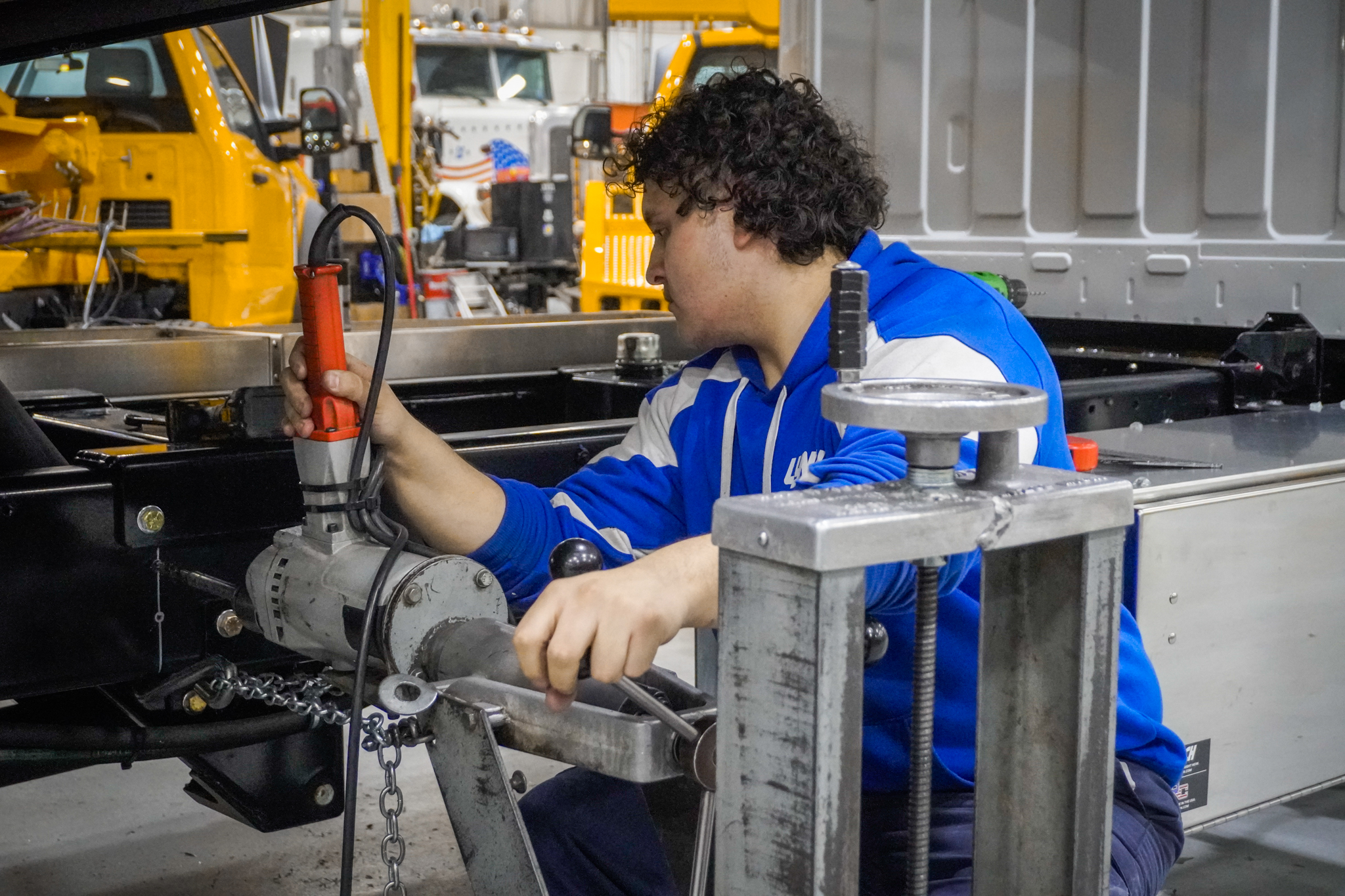
Lynch Truck Center carries new and used commercial trucks, including GMC cutaway van inventory, across its locations in Waterford, Chicago, and Denver. The Waterford facility includes over 30 service bays and in-house upfit capability through Lynch Upfit, which means chassis verification, body installation, and pre-delivery inspection happen at one location rather than across multiple vendors. Buyers can apply for commercial financing through Lynch's finance department and confirm chassis-to-body compatibility with the upfit team before committing to a purchase. Fleet operators adding a unit to an existing account can coordinate through Lynch's fleet support services. With over 35 years of experience in commercial truck sales, service, parts, and upfit, Lynch is built to handle the full procurement sequence from chassis selection through a work-ready delivery.
The Decision Before You Buy a GMC Cutaway Van
The buyer's decision comes down to three paths. Pre-upfitted dealer stock is the fastest route for buyers who need immediate deployment and whose operation fits a standard body configuration. A stock chassis paired with a custom upfit offers more configuration flexibility while still eliminating the factory production queue. A factory order remains the right choice when the body requirement is specialized enough that no stock chassis matches the needed GVWR, wheelbase, or prep package.
The correct path depends on how standardized the body type is, how urgent the deployment timeline is, and whether the selling dealer can handle the upfit or connect the buyer to a qualified shop without adding a coordination gap. Buyers who arrive at a dealer with their body spec, GVWR class, and wheelbase requirements already confirmed move through any of these paths faster than those who start the conversation without those details in hand. Browse inventory or contact a dealer with upfit capability to match a chassis to your operation before the next production cycle adds more weeks to the wait.