What to Look For in Fleet Upfitters for a Mixed Vocational Fleet

Why a Mixed Vocational Fleet Raises the Bar on Upfitting
A single dump truck order is straightforward. Twelve trucks split across service bodies, dump bodies, flatbeds, and a couple of cab-and-chassis units waiting on cranes is a different job entirely. A mixed vocational fleet asks one build partner to handle bodies that mount differently, wire differently, and get serviced differently, all while keeping the trucks consistent enough that a driver can move between them without relearning the controls. That combination is where a lot of upfit relationships fall apart.
The reader buying this kind of fleet is usually a fleet manager or owner weighing monthly payment against uptime, not someone shopping on appearance. The trucks have to start producing revenue the week they arrive, and they have to keep producing it for years. So the question is rarely who can bolt a body onto a frame. Most shops can do that. The real question is who can do it consistently across different body types, deliver on schedule, and still be reachable when something needs a repair eighteen months later.
Good fleet upfitters earn their keep on the parts of the job that never show up in the quote. Spec accuracy, build repeatability, parts support, and warranty coverage decide whether a fleet runs clean or generates a string of small headaches that eat into your week. This guide walks through what separates a dependable build partner from a shop that simply has open bay space, and how to evaluate one before you commit a full order.
What a Mixed Vocational Fleet Actually Demands From a Build Partner
A mixed fleet demands a partner who can hold a single standard across trucks that do completely different work. When your bodies range from service packages to dumps to flatbeds, the build shop has to manage several engineering problems at once and still hand back trucks that feel like they came from the same place. That is harder than running ten identical units down a line, and it is the first thing worth probing in any conversation with a prospective shop.
The demands stack up quickly. Weight distribution changes with every body type, so payload ratings and axle loading have to be calculated per configuration rather than copied from one truck to the next. Electrical integration varies, since a dump hoist, a liftgate, and a crane each pull power differently and need their own controls and protection. Mounting hardware differs by chassis and body combination. A partner who treats all of this as routine, and can walk you through how they handle each piece, is telling you something useful about whether your order will go smoothly or turn into a series of corrections after delivery.
Matching Bodies and Equipment to the Work, Not the Chassis
Start with the work the truck does, then choose the body, then choose the chassis to carry it. That order matters because plenty of fleets end up with trucks that are over-spec'd in some areas and short in others simply because someone picked a familiar chassis first and forced a body to fit. A landscape crew hauling material all day has different payload and dump needs than a service unit carrying tools and a compressor to job sites.
A strong build partner asks about the job before talking product. They want to know the loads, the duty cycle, the terrain, and whether the truck idles at job sites running auxiliary equipment. From there they spec a body and recommend a chassis rated to carry it with margin to spare. Lynch Truck Center runs this consultative process through its in-house upfit operation, where the team designs the build around the application instead of starting from whatever is sitting on the lot. That approach keeps you from paying for capability you will never use and from buying a truck that runs at its limit on day one.
Standardizing Across Trucks That Do Different Jobs
Standardization means your drivers and technicians see the same things in the same places, even when the bodies behind the cab do different jobs. You can run dumps, flatbeds, and service trucks in one fleet and still hold common ground on control layouts, switch placement, lighting packages, backup cameras, and the hardware brands used across builds. That consistency pays off in shorter training time, fewer mistakes in the field, and simpler parts stocking back at the shop.
The build partner is where standardization either happens or does not. A shop that documents your spec and repeats it on every unit gives you a fleet that behaves predictably. A shop that improvises each build hands you a collection of one-offs that share a logo and nothing else. Ask how they record and reuse a fleet spec, and whether they can rebuild the same configuration next year when you add trucks. Lynch supports this through its fleet management program, which helps operators hold a single standard as the fleet grows rather than drifting build to build.
Engineering and Spec'ing That Holds Up Under Mixed Workloads
Spec accuracy is the part of upfitting that protects your payload, your warranty, and your safety margins. Before any metal gets cut, a capable partner runs the numbers on gross vehicle weight rating, axle loading front and rear, center of gravity, and how the finished truck will behave loaded versus empty. Get this wrong and you end up with a truck that is technically built but legally overweight or unstable under load, which is a problem you discover at the worst possible time.
Mixed workloads make the math harder because no two configurations distribute weight the same way. A dump body loads the rear axle heavily. A long service body with a crane shifts the balance again. A partner who spec's well treats each truck as its own calculation and documents the result, so you have a record of why the truck was built the way it was. That documentation matters when you go to resell, when you add identical units later, or when a question comes up about ratings during an inspection. Ask to see how they handle weight studies and whether they provide the finished specs in writing.
In-House Builds Versus Subcontracted Work
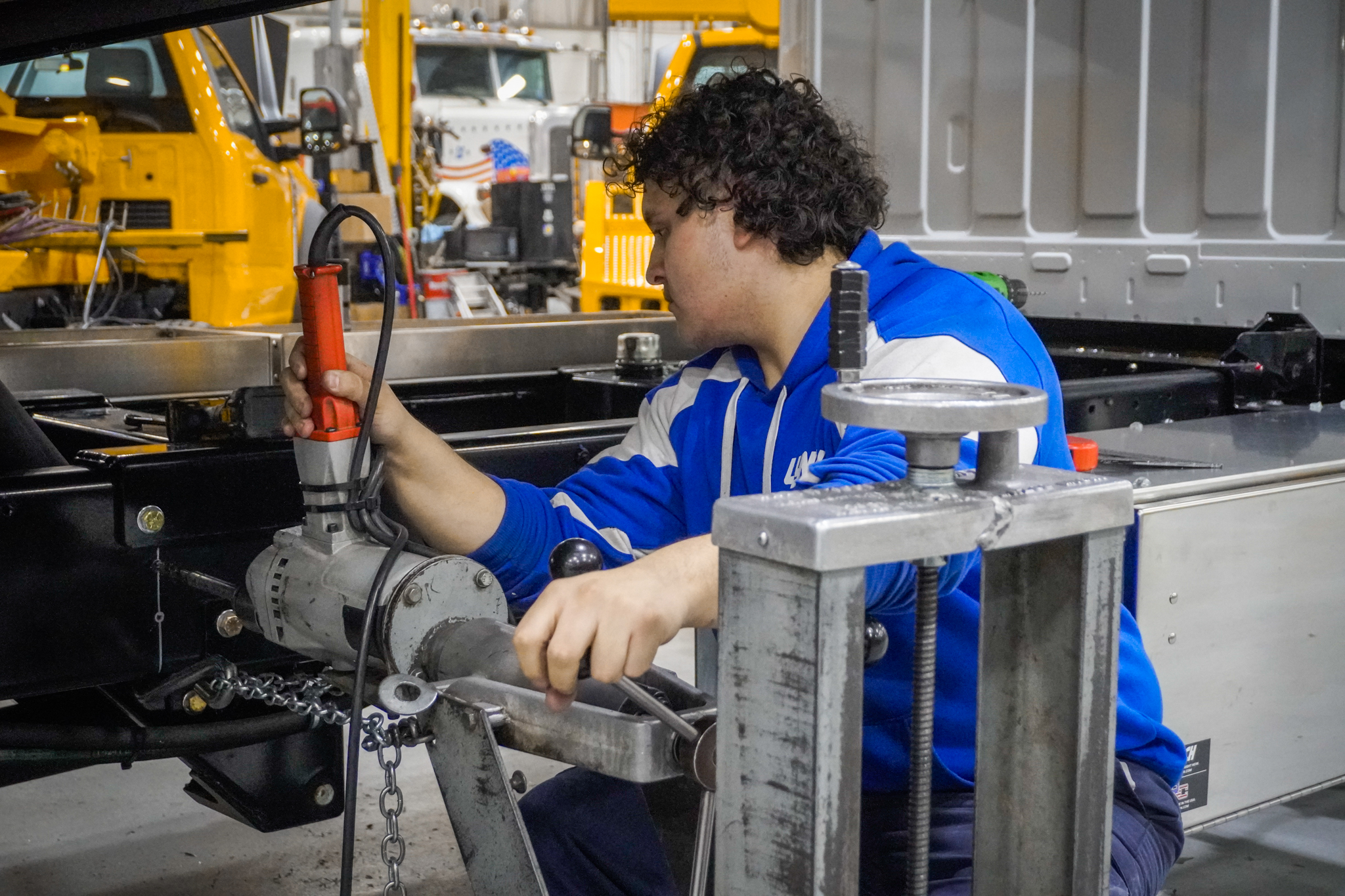
In-house building gives you one team accountable for the whole truck, from spec to final delivery. When the same shop that quoted the job also cuts the metal, mounts the body, wires the electrical, and paints the finished unit, there is no handoff where responsibility gets blurry. If something needs correcting, you call one number. Shops that subcontract the actual build to a third party add a layer between you and the work, which can stretch timelines and complicate warranty claims when a body issue surfaces down the road.
Lynch handles builds through its own shop and paint booth rather than farming the work out, and you can see the range of completed configurations in its recent upfit projects. That matters for a mixed fleet because the team carries knowledge of how your dumps, flatbeds, and service trucks were built across the entire order, not just the one truck in front of them. Ask any prospective partner directly whether the build happens under their roof or goes to an outside body shop, and who owns the warranty on the upfit work once the truck is yours.
Lead Times and Build Capacity When You Order in Volume
Lead time is the number that determines when your fleet starts earning, so pin it down before anything else. A shop with open bay space and a clear chassis pipeline can give you a realistic delivery window. A shop that is backed up, or that depends on a subcontractor's schedule, will give you a hopeful one. For a mixed fleet, ask for the timeline per body type, because a service body and a custom crane build rarely take the same number of weeks to complete.
Capacity is the other half of the question. A partner building a full fleet order needs enough bays, enough fabricators, and enough chassis sourcing to run several builds in parallel without your last truck slipping months behind your first. Ask how many units they can have in process at once and how they sequence a multi-truck order. A partner who can stage your delivery, getting the first trucks working while the rest finish, keeps your operation from waiting on the whole order before anything produces revenue. That staging ability is worth as much as raw speed, and it is the kind of thing a busy shop has thought about and a thin one has not.
Serviceability After the Truck Leaves the Lot
The build is half the relationship. The other half is what happens when a hoist sticks or a liftgate fails two years in. A partner who can service what they build keeps your trucks earning instead of sitting. A partner who builds and disappears leaves you hunting for a shop that understands an upfit it never touched. For a fleet that has to stay on the road, serviceability is often the deciding factor between two otherwise similar quotes.
Look for a partner with a real service operation behind the build, not just a sales desk. Lynch backs its trucks through a factory-authorized service center that handles both the chassis and the upfit equipment, which means one location can address an engine fault and a body problem in the same visit. Ask whether the partner services the brands they sell, whether they offer DOT inspections and preventative maintenance, and how quickly they can get a downed truck back to you. Uptime is the metric that pays the bills, and the right service support is what protects it over the life of the fleet.
Parts Availability and Repair Turnaround
Parts availability decides how long a repair takes, full stop. A truck waiting two weeks for a back-ordered part is a truck not generating revenue, and across a fleet those delays add up fast. A build partner who stocks genuine parts for the bodies and equipment they install can turn most repairs around in days rather than weeks. That is the practical difference between a partner with a real parts operation and one who orders everything as needed after the truck is already down.
Ask what the partner keeps on the shelf for the equipment going on your trucks. A shop that stocks thousands of warranted parts for the brands they carry can keep your fleet moving without waiting on a distributor across the country. For a mixed vocational fleet running several body types, parts depth matters even more, because you are relying on one partner to support dumps, flatbeds, cranes, and service equipment all at once. Confirm they carry OEM parts for what they build and ask about typical turnaround on common repairs before you sign anything.
Single-Source Building Versus Juggling Multiple Vendors
Buying the chassis, the body, the upfit, and the service from one partner removes the finger-pointing that happens when something goes wrong across vendor lines. When a chassis dealer, a body manufacturer, and a separate upfit shop all touch the same truck, a problem at the seams becomes everyone's responsibility and no one's fault. A single-source partner owns the whole truck, which means one warranty conversation and one point of contact when an issue surfaces.
For a mixed fleet, the single-source advantage grows with every body type you add. Coordinating three vendors on one truck is manageable. Coordinating them across a dozen trucks in four configurations is a part-time job you did not sign up for. The best fleet upfitters handle chassis sourcing, body mounting, equipment installation, and ongoing service under one roof, so your fleet manager spends time running the operation instead of refereeing vendors. Ask whether a prospective partner can deliver a finished, road-ready truck without sending it elsewhere, and whether they stand behind both the chassis and the upfit when a repair comes up.
Quality Control and Build Consistency Across a Fleet Order
Quality control is what keeps truck number twelve built to the same standard as truck number one. A fleet order is a test of process, not just craftsmanship, because the shop has to repeat the same build accurately many times over. Without a documented process and inspection at each stage, small variations creep in, and you end up with trucks that should be identical but are not. Those differences turn into maintenance surprises and driver complaints down the line.
Ask how the partner checks their own work. A serious shop inspects wiring, torque, body mounting, and equipment function before a truck ships, and keeps a record of that inspection. They build from a documented spec rather than memory, so the tenth truck matches the first. For a mixed fleet, also ask how they keep consistency within each body type while managing the differences between types. Build consistency is quiet when it works and loud when it does not, and the only honest way to judge it ahead of time is to ask about process and look at trucks the shop has already delivered to fleets like yours.
Warranty Coverage and Manufacturer Authorization
Manufacturer authorization tells you a partner has met a manufacturer's standards for training, tooling, and parts, which protects your warranty when work gets done. An authorized dealer can perform warranty repairs directly instead of sending you elsewhere, and the manufacturer stands behind the work. For the upfit itself, you want a clear answer on who warranties the body and equipment installation, separate from the chassis warranty, and for how long that coverage runs.
Lynch is factory-authorized for Hino, Isuzu, Chevrolet, and GMC, and an authorized Miller Industries distributor for towing and recovery equipment. That authorization means warranty work on those products stays in-house rather than getting bounced to another shop. When you evaluate a build partner, ask which manufacturers they are authorized to sell and service, and confirm that the same shop can handle a warranty claim on both the chassis and the upfit. A partner who has to refer warranty work elsewhere adds downtime and uncertainty to every covered repair, which works against the whole reason the coverage exists.
Chassis Knowledge and Compatibility Across Brands
Chassis knowledge keeps your bodies and equipment matched to a frame that can actually carry them. A partner who works across multiple chassis brands can recommend the right platform for each body type instead of pushing the one line they happen to carry. That flexibility matters for a mixed fleet, where a service body, a dump, and a flatbed may each be best served by a different chassis make or wheelbase.
A knowledgeable partner understands frame ratings, cab-to-axle dimensions, power takeoff options, and how each chassis handles the demands of the body it carries. They can tell you why a particular Isuzu or Hino cabover fits a tight-turning urban route while a conventional chassis suits a heavier highway application. Ask how many chassis brands a prospective partner works with and whether they spec the chassis to the body or simply install on whatever you bring through the door. A shop fluent across brands gives you trucks that are matched rather than compromised, and that matching shows up in payload, handling, and total cost of ownership over the life of the fleet.
Questions to Ask Before You Sign a Build Order
The right questions surface the gaps a quote hides. Before you commit a fleet order, ask whether the build happens in-house or gets subcontracted, who owns the warranty on the upfit work, and what the lead time is per body type. Ask how many units they can build in parallel and how they stage a multi-truck delivery. Ask what parts they stock for the equipment going on your trucks and what typical repair turnaround looks like when a truck goes down.
Push further on the things that protect you long term. Ask for the weight calculations in writing, ask how they document and reuse your fleet spec, and ask which manufacturers they are authorized to service. The most reliable fleet upfitters answer these questions plainly and back the answers with examples, because they have handled fleet orders before and know what matters to an operator. A partner who gets vague when you ask about process, warranty, or service is telling you how the relationship will go once the trucks are delivered and the easy part is over.
Reading a Partner's Track Record and References
A track record tells you what a partner actually delivers, not just what they promise in a quote. Ask how long they have been building trucks, what kinds of fleets they have outfitted, and whether they can show you completed work similar to yours. A shop that has built mixed vocational fleets before has already solved the problems your order will raise, and that experience shows up in fewer surprises and smoother delivery.
References from operators running fleets like yours are worth more than any sales pitch. Ask to speak with a customer who bought a multi-truck order and find out whether the trucks arrived on schedule, whether the builds held up, and how the partner handled service afterward. The strongest fleet upfitters have a base of repeat fleet customers who keep coming back, which is the clearest signal that the trucks perform and the support holds. Lynch has built and serviced commercial and vocational fleets for more than thirty-five years, and that length of track record is the kind of history worth weighing when you decide where to place a fleet order.
Building Your Next Fleet With Lynch Truck Center
A mixed vocational fleet runs best when one partner handles the spec, the build, the parts, and the service with a single standard across every truck. Lynch Truck Center brings the in-house build capability, factory authorization, parts depth, and service support that keep a fleet earning year after year. If you are planning your next fleet order, reach out to the Lynch team for a build that matches your work, your chassis, and your budget from the first truck to the last.