How to Vet Tow Truck Sales Near Me Before You Commit to a Build

A tow truck listed as "in stock" online usually means the chassis is in stock. The body, winch, and equipment package that turn that chassis into a working wrecker or carrier are often a separate build stage that hasn't started yet. That gap between what shows up in a search result and what actually rolls off the lot ready to work is where most buyers get surprised, usually after they've already placed an order.
Before you commit to any build, you need straight answers from the distributor on four things: what's actually available right now, how long the build will take, what happens when something breaks after you buy it, and what financing really requires. Here's how to ask the right questions and read the answers correctly.
Know the Build You're Actually Buying
A tow truck has two parts: the chassis and the body. The chassis is the cab and frame, usually from a manufacturer like Isuzu, Hino, or a heavy-duty builder like Peterbilt or Kenworth. The body is the wrecker, carrier, or rollback equipment mounted on top, built by a manufacturer like Miller Industries under brands such as Century, Vulcan, Chevron, or Holmes.
When a listing shows a unit as available, ask whether that means the complete, work-ready truck is sitting on the lot, or whether it's the chassis alone with the body still to be mounted. A chassis-only listing isn't a problem by itself. It's a normal stage in the process. The problem is finding out about it after you've already committed to a delivery date in your head.
Every other question in this article flows from that one distinction. If you know whether you're buying a finished truck or starting a build, you can ask about lead time, parts, and financing with the right expectations already set.
Match the Truck Class to the Job
Towing equipment isn't one category. Car carriers and rollbacks (the same piece of equipment, just different names for it) load a vehicle onto a flat bed and haul it, which makes them the standard choice for passenger car and light truck recovery. Light-duty wreckers use a boom and underlift to pull and tow instead of carrying, and they cover similar passenger vehicle work where a carrier isn't practical.
Heavy-duty wreckers step up to commercial trucks, buses, and larger recovery jobs, with boom and winch capacity rated well above the light-duty class. Rotators add a rotating boom for complex recoveries, like a truck on its side in a ditch. Industrial carriers are the largest flatbed class, built to move heavy equipment and oversized loads rather than passenger vehicles. An industrial carrier is not the same thing as a "heavy-duty carrier," a term that doesn't actually describe a real equipment class, so if a distributor uses it, ask them to clarify what they mean.
Chassis rating drives which class fits your calls. Heavier recovery work needs a chassis with a higher gross vehicle weight rating and a boom rated to match, since underpowering either one limits what the truck can safely handle. Miller Industries builds all of these classes, Century, Vulcan, Chevron, and Holmes, under one manufacturer, so the brand name tells you less than the model and class do. Before you shop, know which class your calls actually require. A towing company doing mostly passenger vehicle recovery doesn't need an industrial carrier sitting on the lot, and a municipality moving heavy equipment isn't served by a light-duty wrecker.
Confirm Chassis Availability Before You Commit
A "tow truck sales near me" search shows you dealer listings, not real-time chassis status. Some of what you see is sitting on the lot ready to build. Some of it is in transit. Some of it is waiting on manufacturer allocation, meaning the dealer has ordered it but hasn't received it yet.
Ask the distributor directly: is the chassis for this specific build physically on the lot right now, in transit to the lot, or still waiting on allocation from the chassis manufacturer? Get a straight answer, not a general estimate. A chassis sitting at the dealership moves through the build process faster than one that hasn't arrived yet, no matter how fast that dealer's body shop works. If the chassis isn't there, the stated lead time you're quoted depends on something the dealer doesn't fully control.
This is also where location matters. Lynch Truck Center operates locations connected to Waterford, Chicago, and Denver, and chassis and body stock can vary by location. If the unit you want isn't sitting at the location nearest you, ask whether it's available at another Lynch location and what that does to your timeline.
Ask About Build and Upfit Lead Time
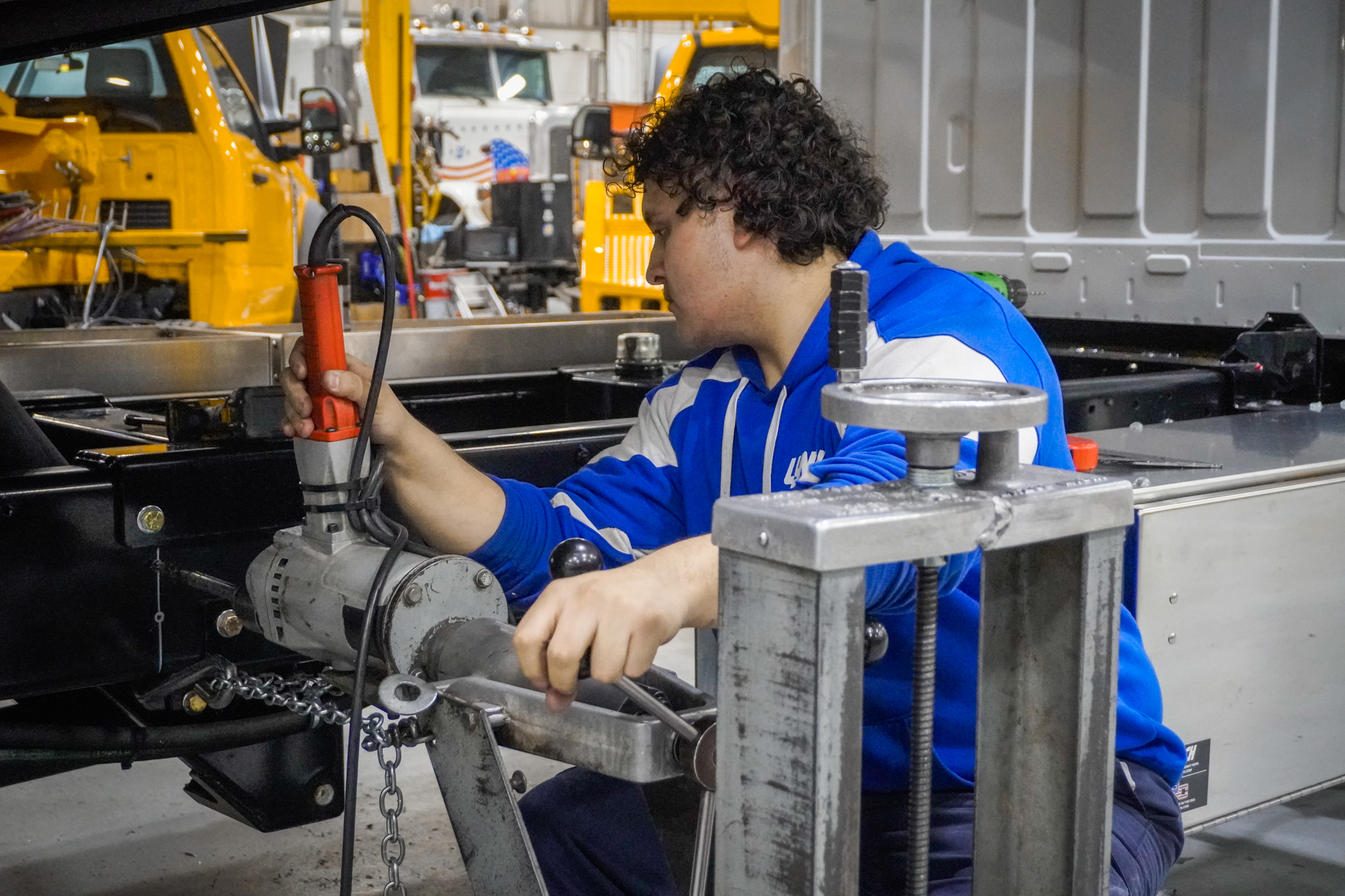
Lead time depends heavily on duty class and where the build happens. Light-duty and medium-duty builds can often be upfitted in-house, including paint, which tends to mean a more direct timeline because the distributor controls the whole process from chassis to finished truck.
Heavy-duty builds work differently. Those go on chassis like Peterbilt or Kenworth, and that upfit work isn't finished in-house the way light- and medium-duty builds are. That doesn't make heavy-duty builds worse, it just means the timeline depends on more parties and more steps, so it's worth asking about specifically rather than assuming it matches a lighter build.
Whatever class you're ordering, ask for a lead time tied to your specific chassis and equipment package, not a general range the dealer quotes to everyone. Then ask what extends that window. Custom paint, branding, or add-on equipment beyond the standard package can all add time, and you want to know that before you order, not after. No distributor can guarantee an exact delivery date, since chassis supply and manufacturer schedules shift, but a specific, build-tied estimate is a reasonable thing to expect.
Vet Parts and Service Support
What happens after the sale matters as much as the sale itself. Once a tow truck is in your fleet, a cracked hydraulic line or a down winch motor puts a revenue-producing asset out of service, and how fast you get it back determines how much that downtime costs you.
Ask the distributor whether it stocks OEM parts for the body manufacturer on your build, meaning parts made specifically for that Century, Vulcan, Chevron, or Holmes equipment rather than generic substitutes. Ask what typical parts turnaround looks like for common wear items versus a less common part that has to be ordered in. Then ask whether warranty work and hydraulic repair are handled in-house by the dealership's own service bays or sent out to a third party. In-house service generally means fewer handoffs and a shorter repair cycle, since the same team that knows the equipment is doing the work.
Parts support isn't something you shop for through an online catalog, since towing equipment parts generally need to be confirmed with a parts team directly rather than ordered sight unseen. A quick call or conversation with that parts team before you buy tells you more about post-sale support than a sales pitch ever will.
Compare Financing Terms Across Dealers
Financing applications for commercial equipment purchases typically come down to three things: your business information, ownership details, and references. That's the core of what most distributors need to start processing an application, and it's worth confirming upfront rather than assuming every dealer requires the same paperwork.
Ask each distributor exactly what documentation it needs and roughly how long approval takes once that paperwork is complete. Approval speed usually comes down to how complete your application is when you submit it, not just which lender is reviewing it. No distributor can guarantee approval or a specific timeline, since that depends on your business's financials and the lender's own review, but you can compare how clearly each dealer explains its process before you apply. A distributor that can walk you through the three-step basics without hedging is a good sign you're dealing with a financing process that's actually organized.
What to Do When the Nearest Dealer Doesn't Have What You Need
If the local distributor doesn't have the chassis or build you need, the first move isn't to switch equipment manufacturers or buy from an unverified used listing you found online. Ask whether the distributor can source the chassis or build from another of its own locations.
A distributor operating multiple locations, like Lynch Truck Center's connections to Waterford, Chicago, and Denver, has more than one place to pull inventory from. That's a more direct path than starting over with a different manufacturer or buying a used unit with no service relationship behind it. An authorized distributor can also tell you honestly when a build simply isn't available anywhere in its network soon, which is more useful than a vague promise to "check into it."
The goal is staying inside a supported relationship, where the same company handling your sale can also handle parts and service after you buy, rather than piecing together a truck from a seller you'll never talk to again.
Confirm You're Ready to Sign
You have what you need to commit once four things are confirmed, not assumed: chassis availability, a build-specific lead time, a clear parts and service support plan, and financing terms and documentation requirements. Each one should come from a direct answer or written quote from the distributor, not a general impression from the website.
If any one of those four points is still fuzzy, that's a reason to keep asking before you place an order, not a reason to assume it'll work itself out. A distributor that answers all four clearly, chassis status, timeline, parts and service, and financing, has given you what you need to make a real decision instead of a guess.
Once those answers check out, you're not just hoping the truck shows up ready to work. You know what you're buying, when it's coming, who's standing behind it, and what it took to get the financing in place.
TL;DR
Buyers should ask tow truck distributors four direct questions before committing to a build: what's actually in stock versus what still needs to be built, how long the build will realistically take, what warranty and service support applies after purchase, and what the financing terms actually require.